
Best Dry Fruit Packaging Designs: The Complete Guide for New & Growing Brands

Updated: Sep 14
Dry fruits have traditionally been associated with health, gifting, festivals, and premium food. Today, this category is also becoming an attractive opportunity for home entrepreneurs, D2C brands, retailers, Instagram sellers, grocery businesses, and food startups.

However, starting a dry fruit business is not simply about buying almonds or cashews and putting them into a packet.
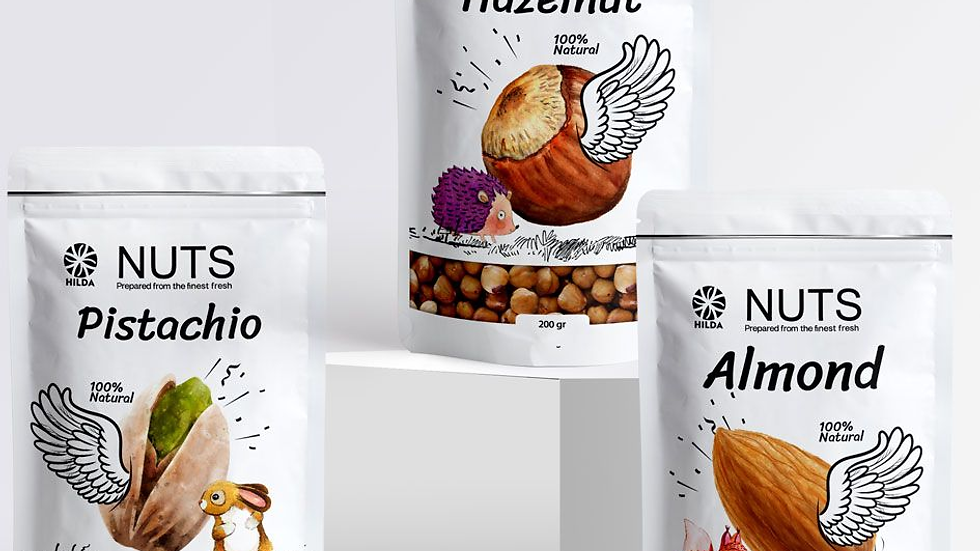
A successful dry fruit brand needs:
A memorable brand name
Attractive packaging
Correct product information
Food-safe packaging
Appropriate FSSAI registration/licence
Correct labelling
Suitable pack sizes
Good product photography
A pricing strategy
Reliable sourcing
A sales channel such as a website, marketplace, retail store, or social media
Consistent branding across every product
One of the most important decisions is packaging design.
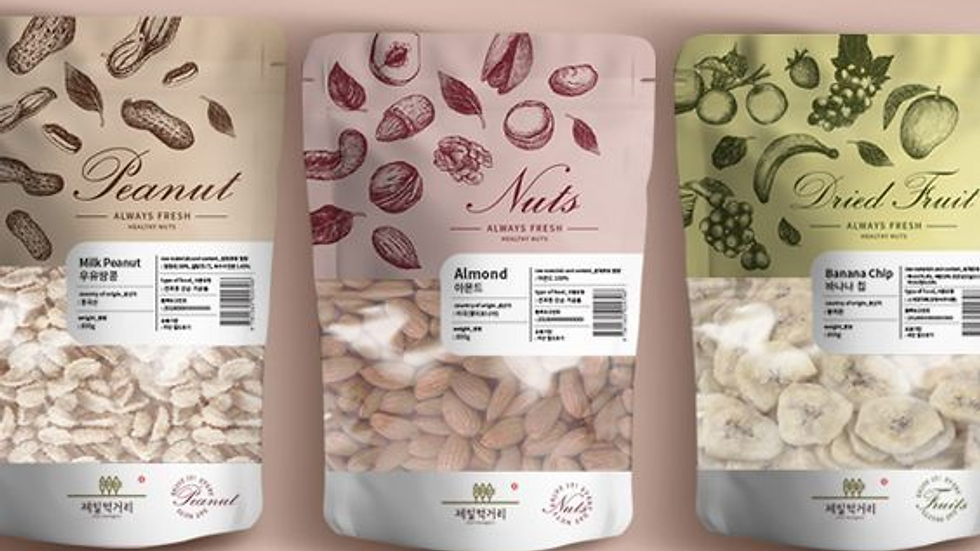
Your packaging is often the first thing a customer notices before tasting the product. For a startup, however, there is one major problem: traditional packaging manufacturers may require large quantities before they will produce custom printed packaging.

That is where No MOQ packaging can change the way a new dry fruit brand launches.
Why Packaging Design Matters for a Dry Fruit Brand
Imagine two packets of almonds sitting next to each other. One has:
ALMONDS 100% Premium Quality
The other has a professionally designed brand identity, attractive almond photography, premium typography, clear product information, a resealable zipper, and a carefully selected colour palette.

Even if the product quality is similar, the second pack may immediately communicate greater value.
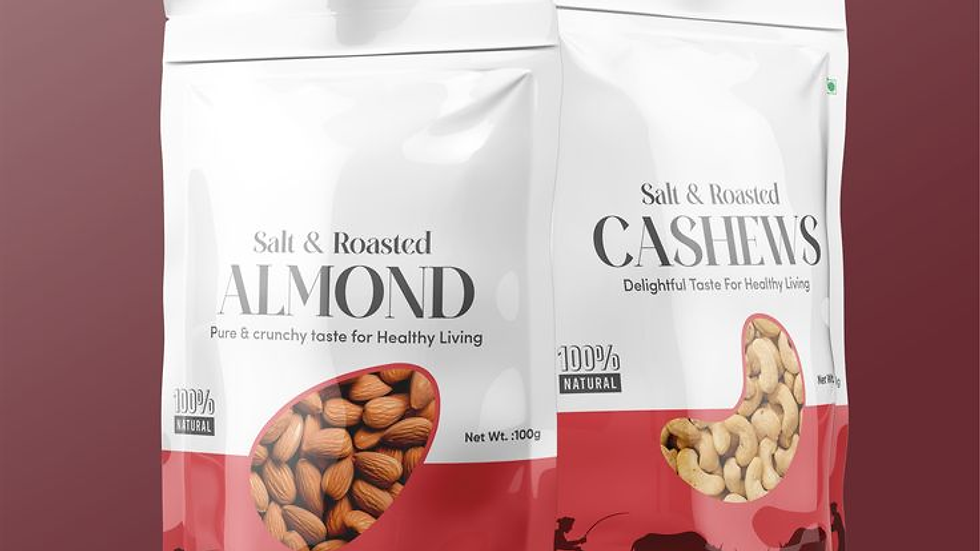
Good dry fruit packaging should communicate:
Premium + Fresh + Hygienic + Trustworthy + Convenient
Your packaging should answer the customer's questions quickly:
What is the brand?
What is the product?
How much is inside?
Is it premium?
Is it hygienically packed?
Can I reseal it?
What is the price?
Who manufactured or packed it?
Is the business compliant?

Best Dry Fruit Packaging Design Ideas
There is no single "best" design for every dry fruit brand. The right design depends on your target customer, product price, positioning, and sales channel.
Here are 50 packaging design directions that can be used for almonds, cashews, pistachios, walnuts, raisins, dates, figs, makhana, and dry fruit mixes.
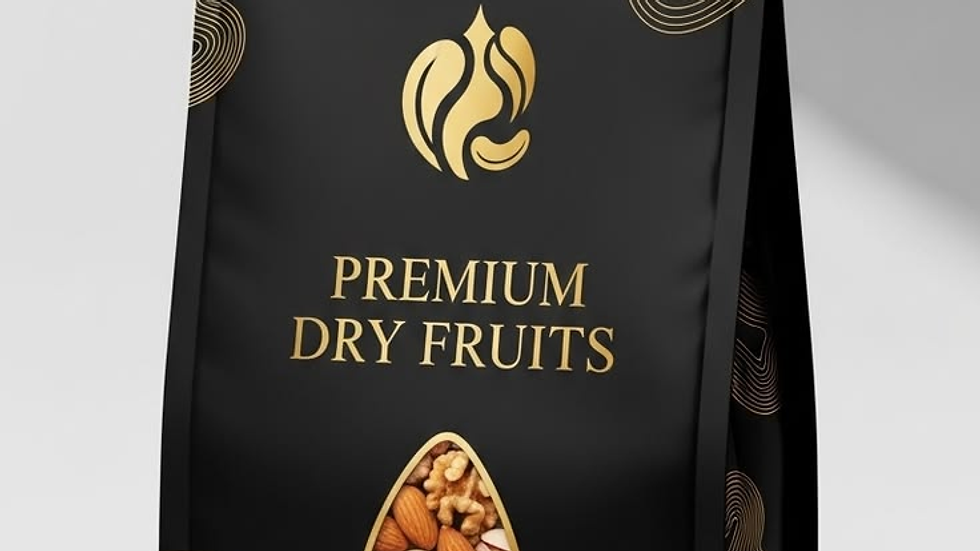
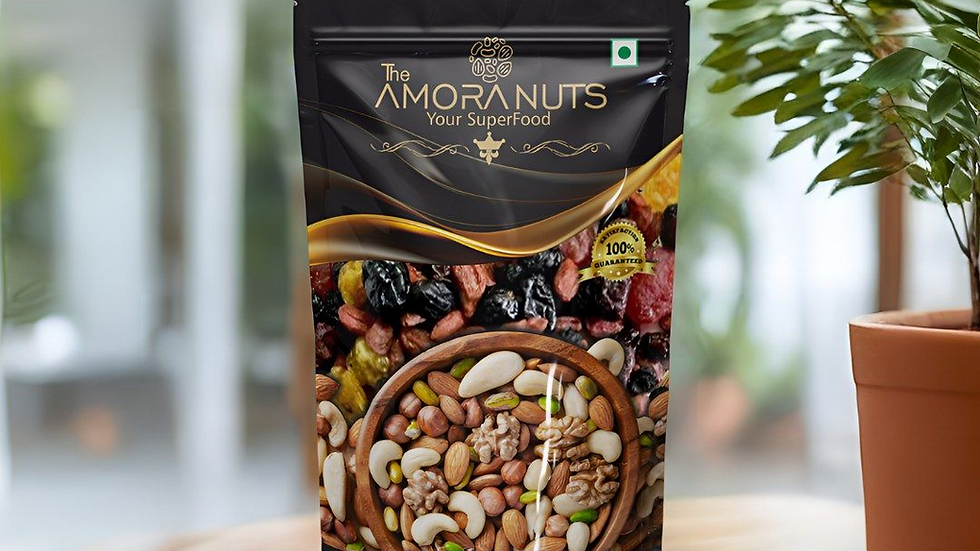
1. Premium Black & Gold
Use a matte black background with gold typography and premium product photography.
Best for: Luxury dry fruit brands and gifting.
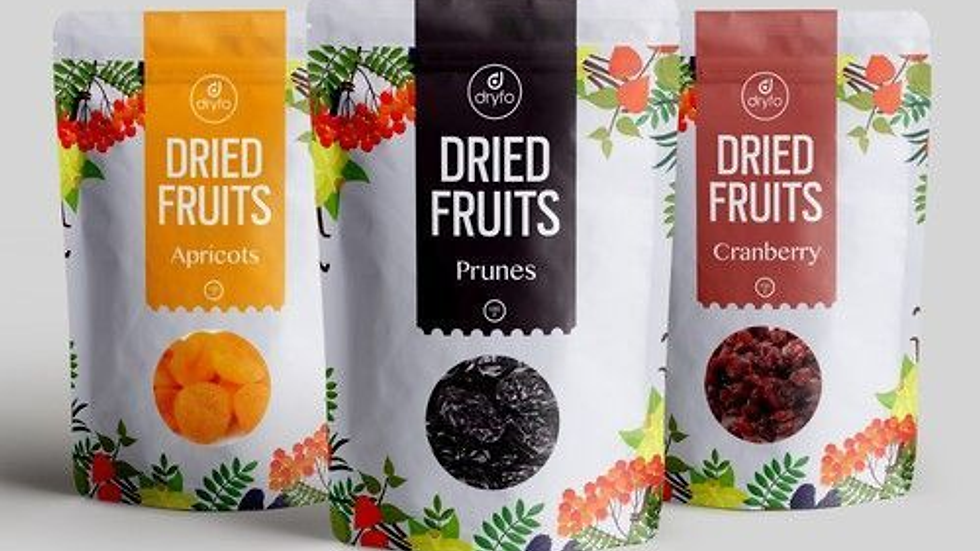
2. Minimal White & Gold
Clean white packaging with subtle gold elements gives a sophisticated appearance.
Best for: Premium urban customers.
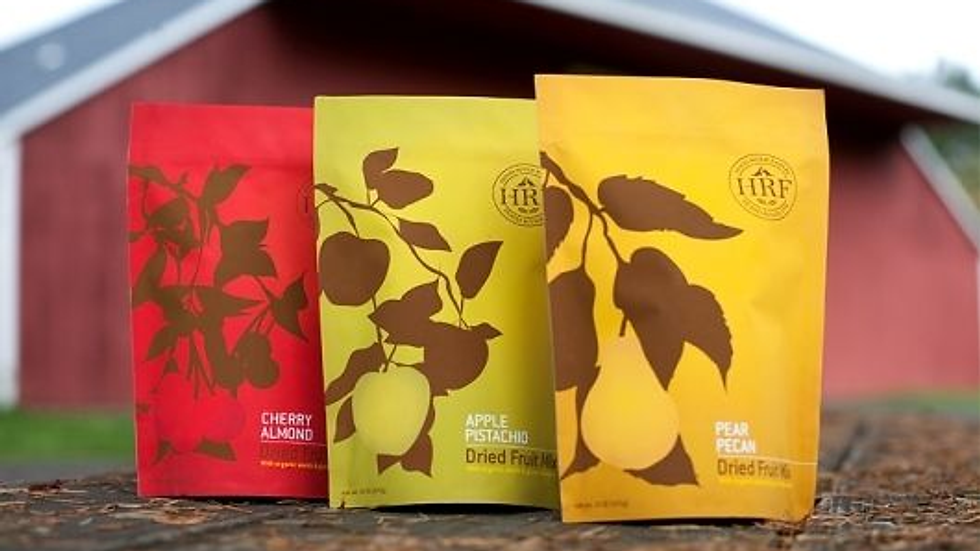
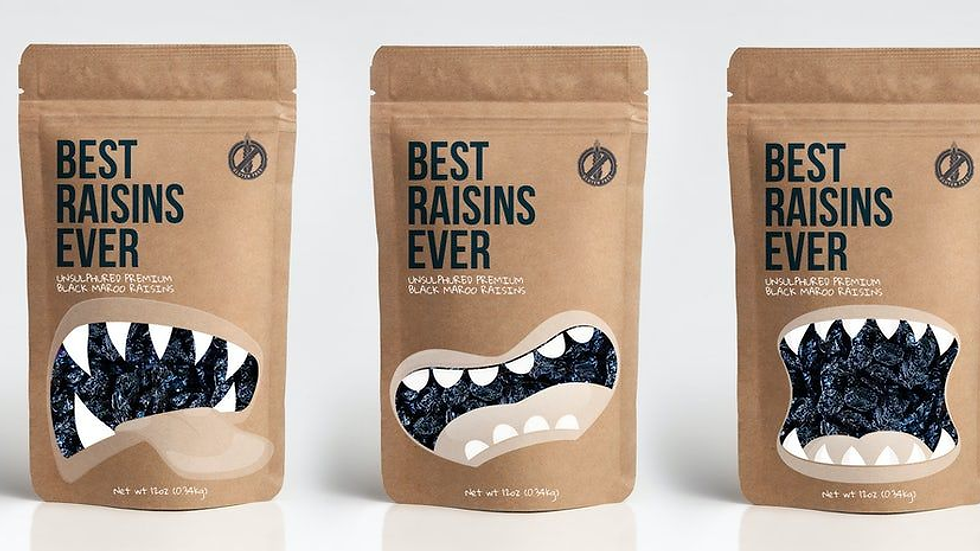
3. Kraft Brown Natural
A kraft-paper-inspired design communicates natural and traditional positioning.
Best for: Organic and natural brands.

4. Deep Green Premium
Dark green with gold accents creates a premium wellness-oriented identity.
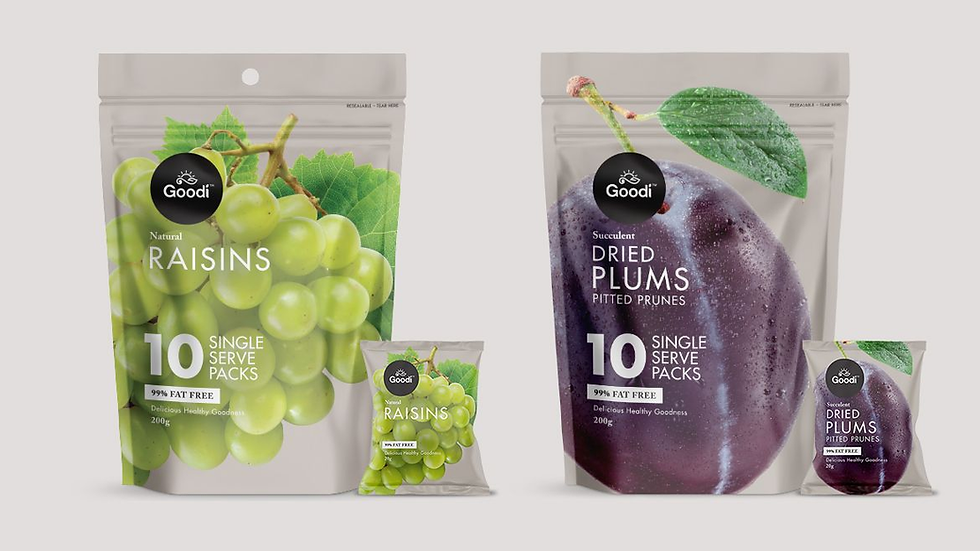
5. Royal Maroon
Maroon communicates richness and works particularly well for festive dry fruit packaging.
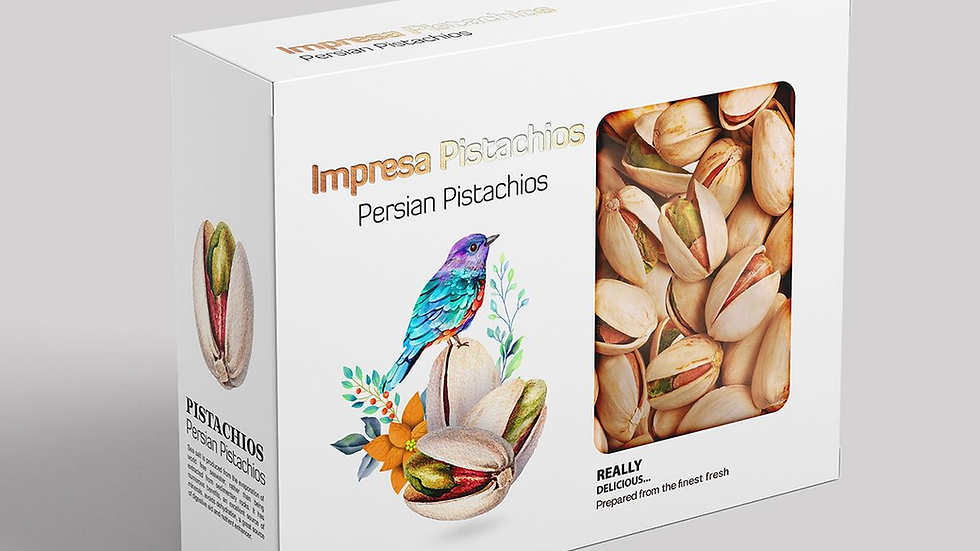
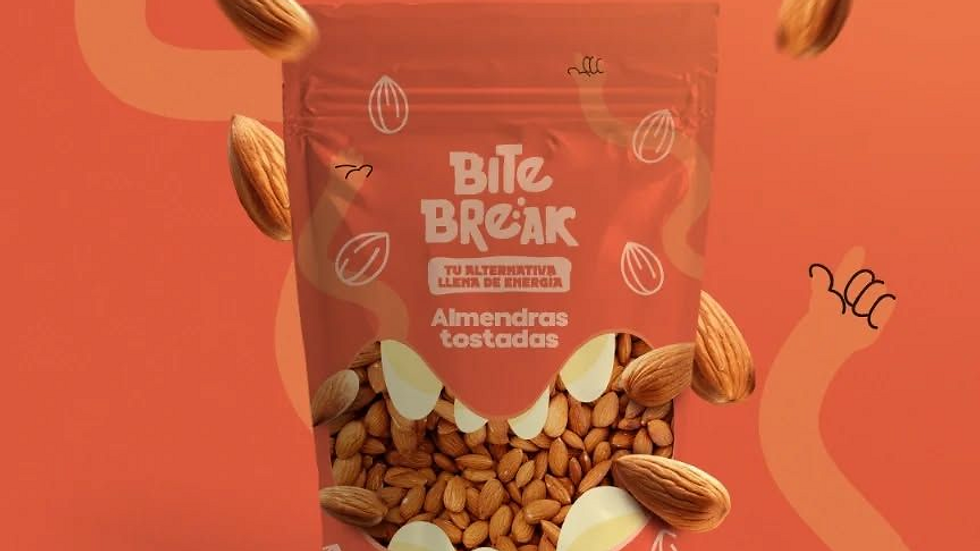
6. Almond-Focused Design
Use a large, high-quality almond image as the hero visual.
7. Cashew-Focused Design
A clean cashew photograph with a bright product-specific colour system makes the variant instantly identifiable.

8. Transparent Window Pouch
Allow customers to see the actual product through a transparent section of the pouch.
9. Full-Foil Premium Pouch
Use a metallic/foil visual treatment to create a luxury appearance.
10. Indian Heritage Design
Use Indian patterns, traditional motifs, and elegant typography.
Best for: Festive and gifting products.

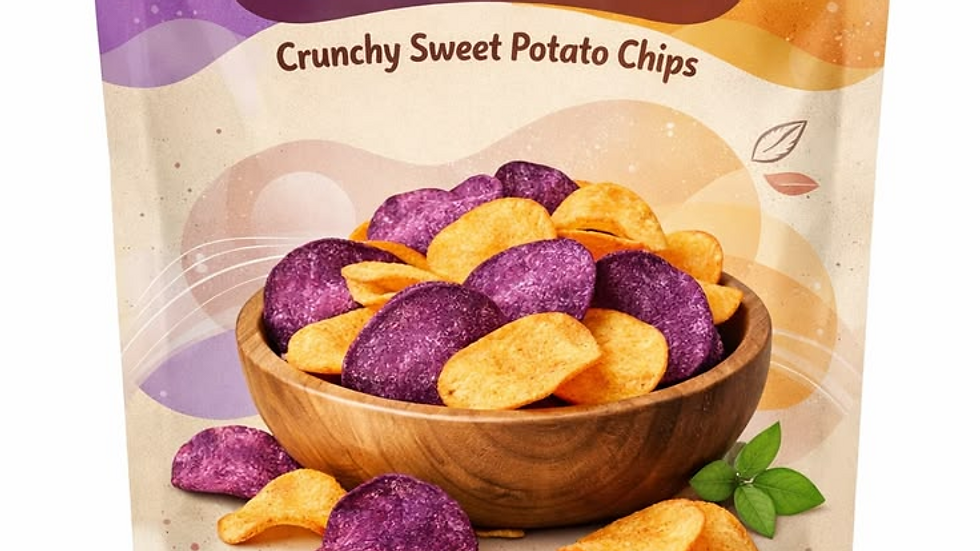
11. Modern D2C Design
Use simple typography, strong whitespace, and a modern colour palette.
12. Organic Green Packaging
Use botanical illustrations, earthy colours, and natural visual elements.
13. Ayurveda-Inspired Design
Useful for brands positioning dry fruits around traditional wellness.
14. Luxury Gift Box Look
Design the pouch so it visually resembles premium gift packaging.

15. Festive Diwali Design
Use gold, maroon, red, lamps, and subtle festive motifs.

16. Eid Gift Design
Elegant crescent-inspired patterns and premium typography can create a gifting identity.
17. Corporate Gifting Design
Minimal, professional packaging suitable for bulk corporate orders.
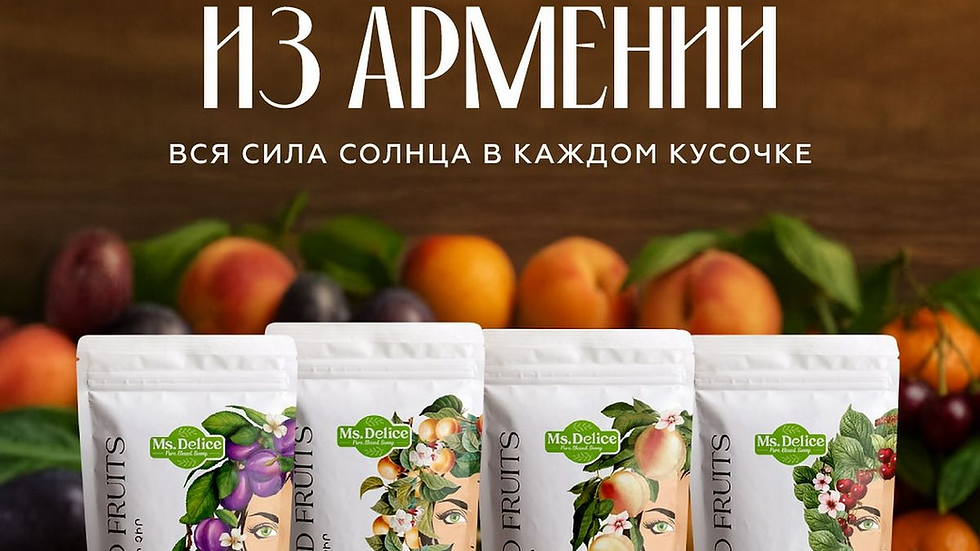
18. Family Pack Design
Large product image with easy-to-read information.

19. Children's Snack Design
Bright illustrations and friendly typography can make dry fruits more approachable for families.
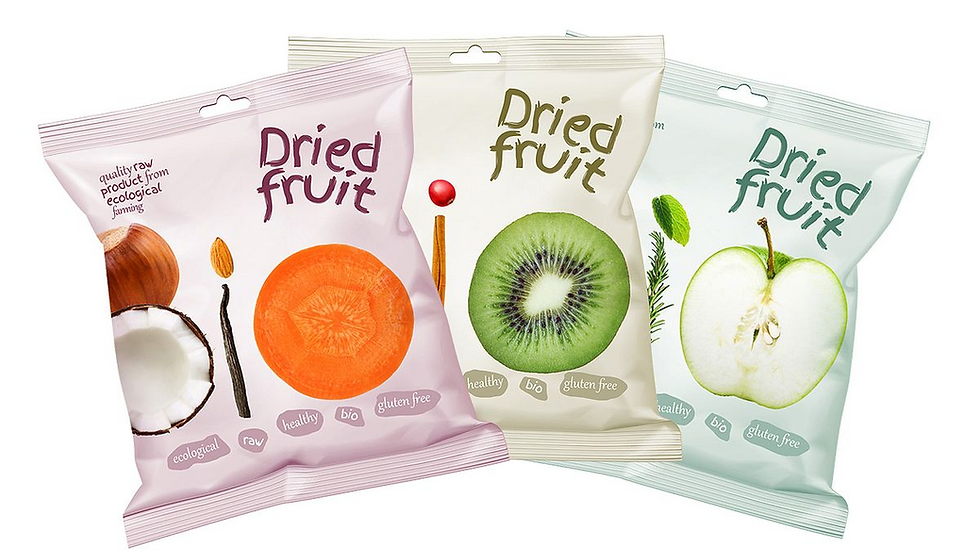
20. Fitness-Oriented Design
Use clean typography and a contemporary wellness aesthetic.
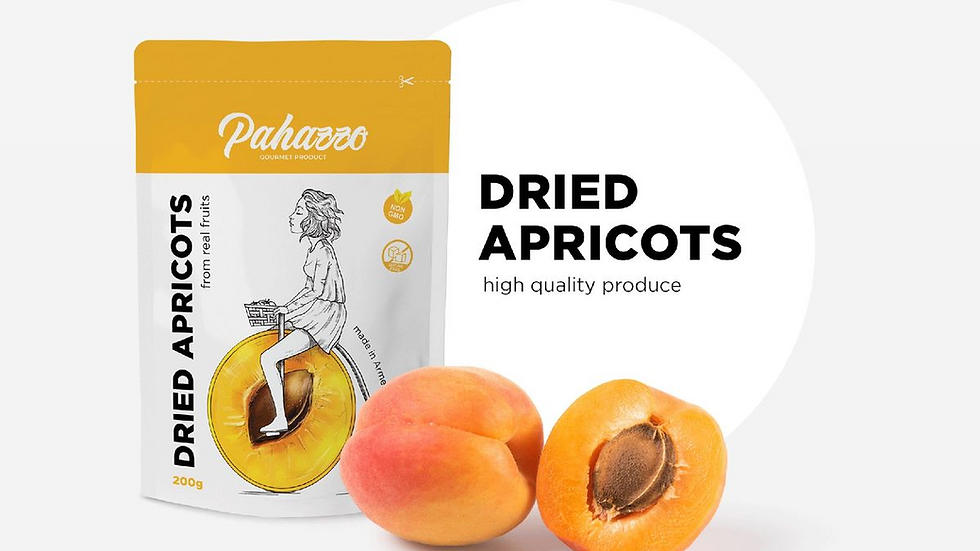
21. Protein & Wellness Theme
Suitable for mixed nuts and fitness-focused products, provided all claims used are legally supportable.
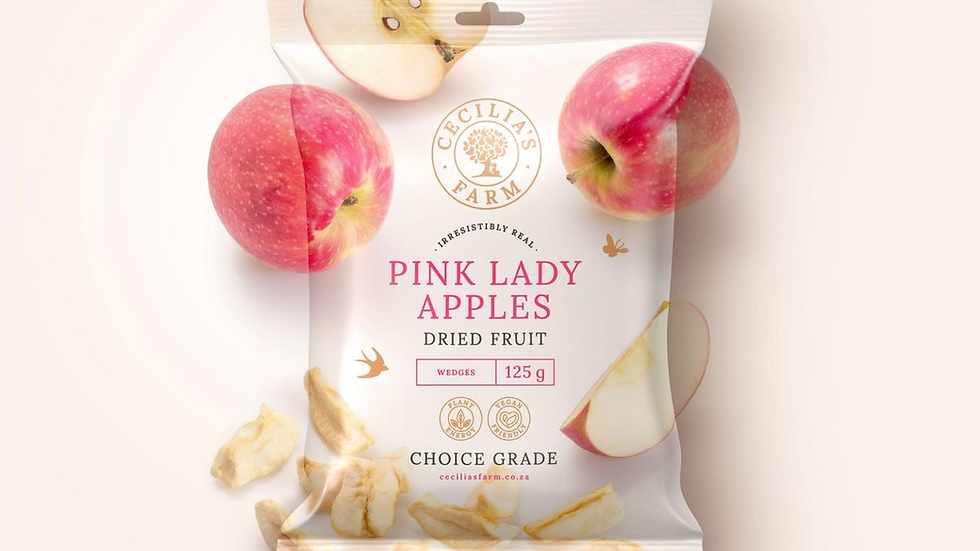
22. Monochrome Design
Use one dominant colour with subtle shades to create a sophisticated identity.
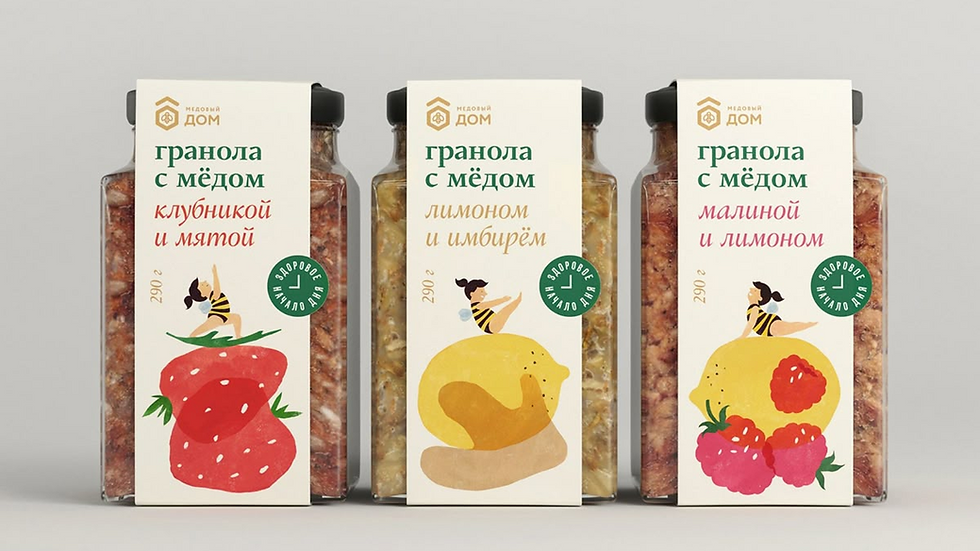
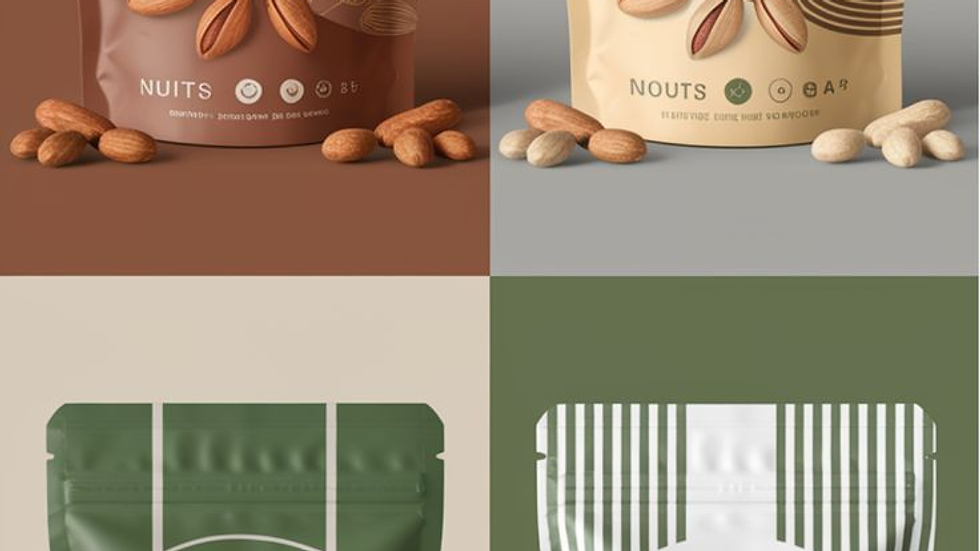
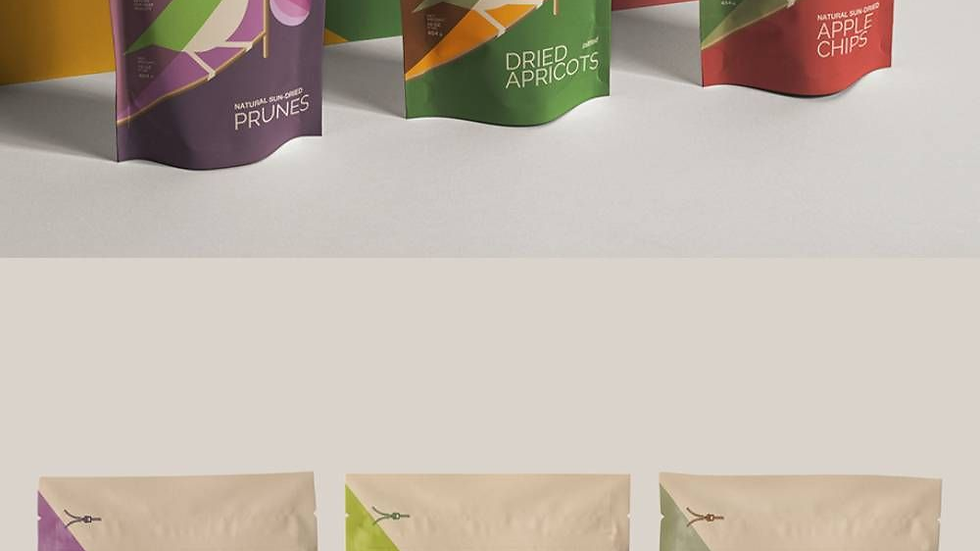
23. Product Colour Coding
Give each product its own colour while maintaining the same brand structure.
For example:
Almonds – Brown
Cashews – Yellow
Pistachios – Green
Walnuts – Blue
Raisins – Purple
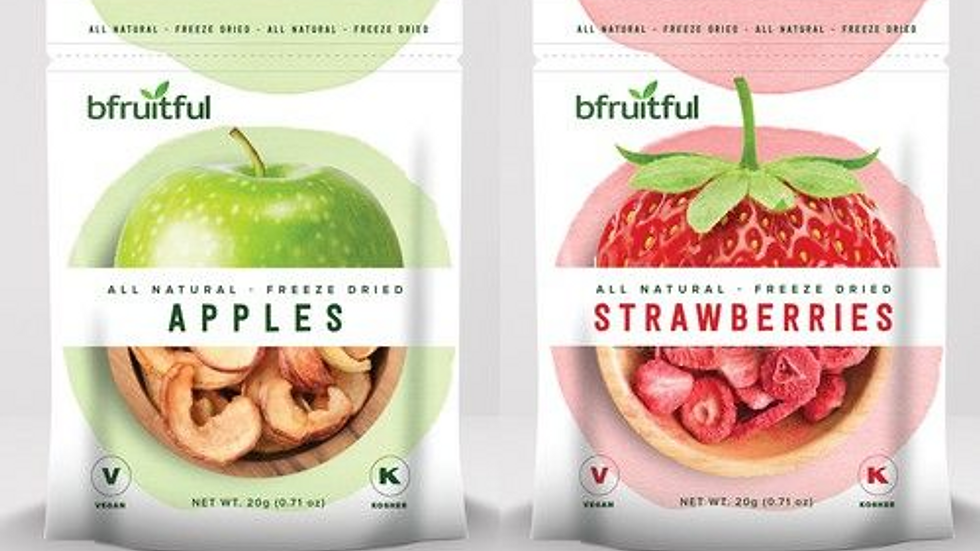
24. Botanical Illustration
Use hand-drawn leaves, nuts, and botanical elements.

25. Luxury Serif Typography
Large serif brand name + minimal information creates a premium appearance.
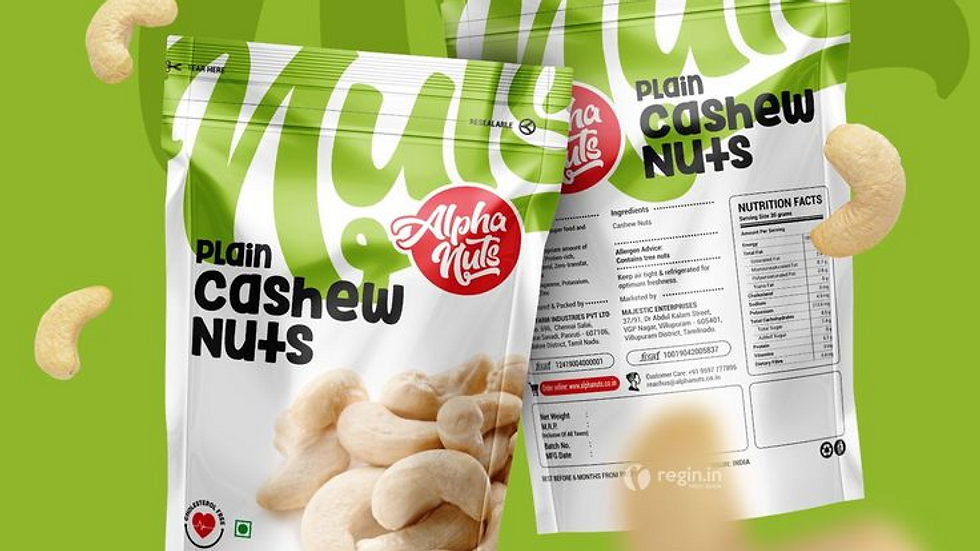
26. Bold Modern Typography
Large typography makes the pack easy to identify on shelves.
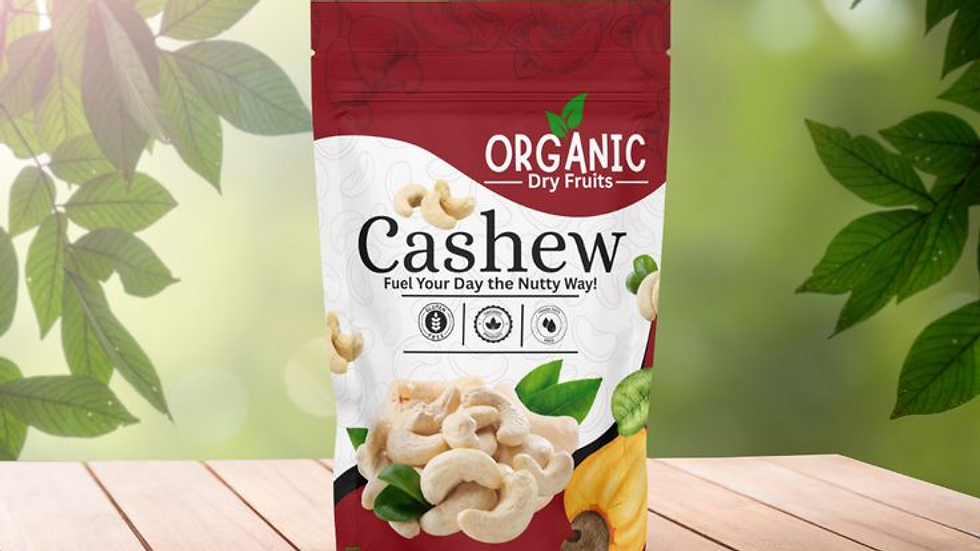
27. Window + Premium Print
Combine product visibility with a high-end printed design.
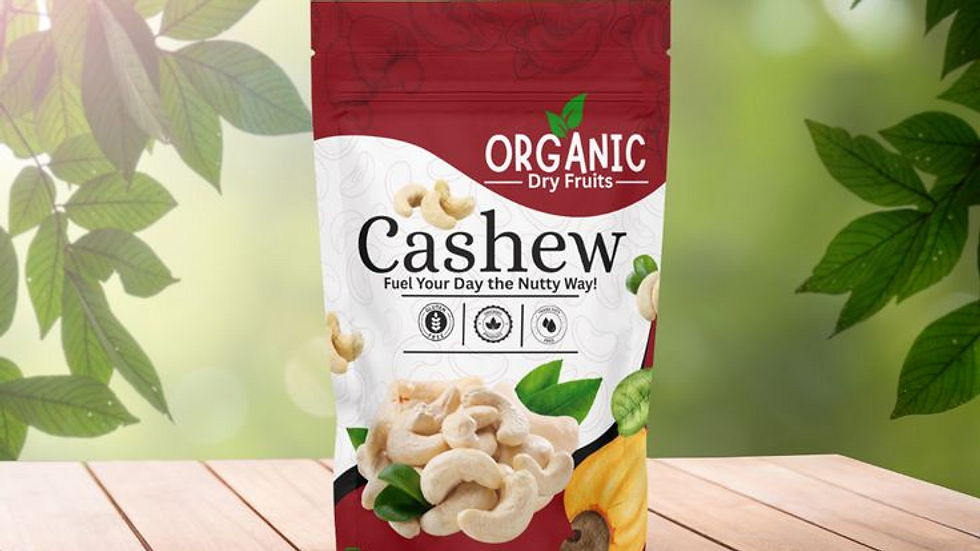
28. Matte Finish Design
Matte packaging gives a sophisticated and soft-touch visual impression.
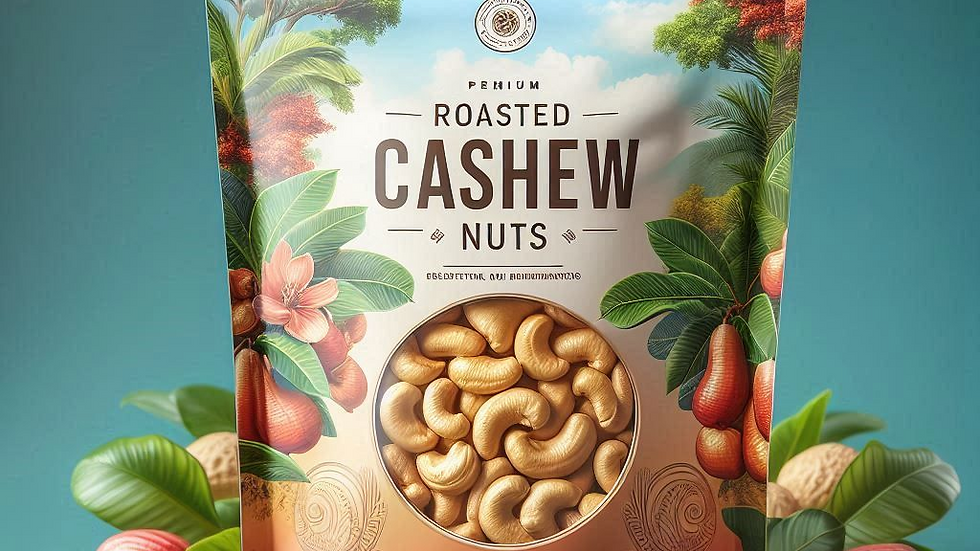
29. Gloss Finish Design
Gloss can make colours and product photography appear more vibrant.
30. Metallic Gold Accent
Use gold selectively instead of covering the entire pack.
31. Silver Premium Design
Useful for modern and contemporary brands.
32. Traditional Indian Pattern
Use subtle paisley, mandala, or geometric patterns without overcrowding the pack.
33. Kashmiri-Inspired Design
Suitable for premium nuts, walnuts, saffron combinations, and gifting themes.
34. California Almond Theme
A clean, international visual language can work for imported or California almond positioning where the claim is accurate.
35. International Premium Design
Use minimal layouts inspired by global premium food brands.
36. Farm-to-Pack Concept
Use farm illustrations and a traceability-oriented story where factual.
37. Origin Story Packaging
Highlight a genuine geographical or sourcing story.
38. Clean Label Design
Keep the front panel extremely simple with only the most important information.
39. Nutrition-Focused Design
Give nutrition information an important role on the back/side panel.
40. Mixed Dry Fruit Design
Show almonds, cashews, raisins, pistachios, and other included products together.
41. Trail Mix Design
Use an energetic layout suitable for snack-oriented positioning.
42. Premium Raisins Design
Use rich purple, burgundy, or earthy colours.
43. Premium Pistachio Design
Green and cream can provide strong product recognition.
44. Walnut Design
Brown, beige, and natural textures can complement walnut imagery.
45. Dates Packaging
Use warm brown, gold, and Middle Eastern-inspired premium visual cues.
46. Fig Packaging
Use earthy purple, cream, and natural botanical elements.
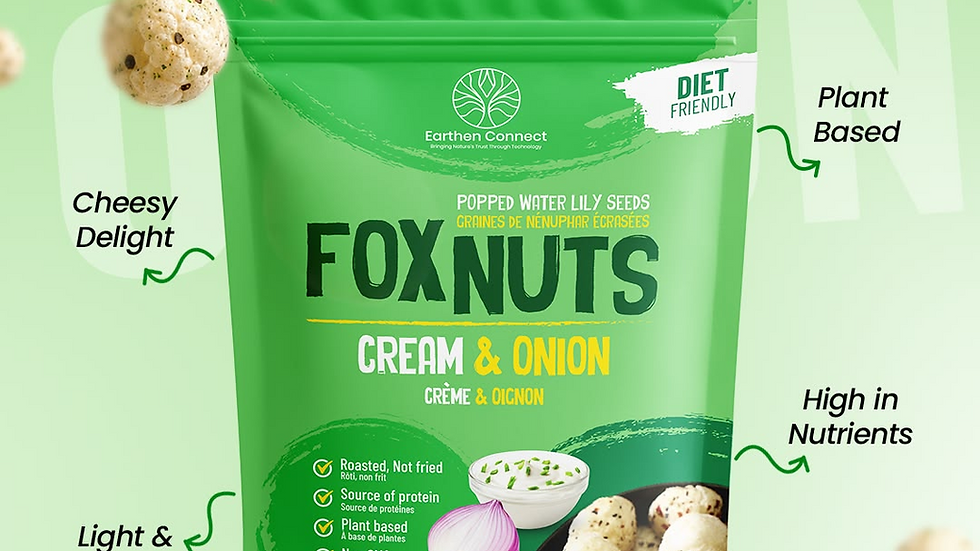
47. Makhana Packaging
Use a contemporary wellness/snacking design.
48. Dry Fruit Gift Hamper Design
Create a common brand identity across multiple products.
49. Premium Pouch + Sticker System
Start with a suitable pouch and use a professionally designed label/sticker system where appropriate.
50. One Master Brand System
Create one master design language and adapt it across 10–20 SKUs.
This is one of the best approaches for startups. Instead of creating completely different designs for every product, establish:
One Logo + One Typography System + One Brand Style + Product-Specific Colours + Consistent Information Layout
This makes the brand look bigger and more established.
What Packaging Is Best for Dry Fruits?
For many modern dry fruit brands, stand-up pouches with zipper closures are a practical packaging option. They offer:
Self-standing display
Large printable surface
Resealable convenience
Lightweight transportation
Strong branding opportunity
Multiple size options
Options for transparent windows
Premium matte/gloss/foil appearances
MyPerfectPack has previously highlighted the shift toward stand-up pouch packaging for emerging dry fruit brands. (Myperfectpack)
The exact packaging structure should, however, be selected according to the product, shelf-life requirement, filling process, storage conditions, and applicable food-contact requirements.
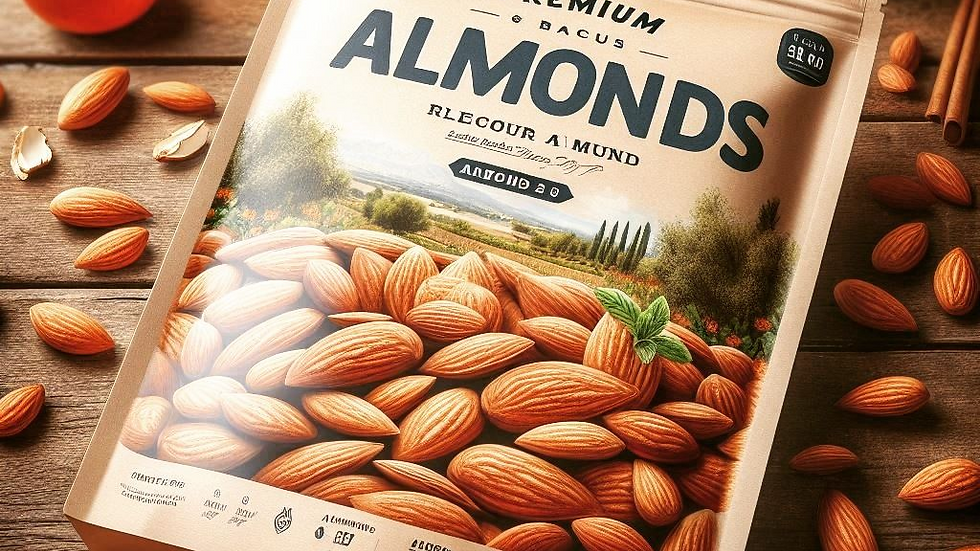
Should You Choose a Transparent Window?
A transparent window can be powerful for dry fruits because the customer can visually inspect the product. It works particularly well for:
Almonds
Cashews
Pistachios
Walnuts
Raisins
Makhana
Mixed nuts
Premium snack mixes
But a window is not automatically better for every product. If your brand is positioned as an ultra-premium luxury brand, a completely opaque premium pouch may create a stronger visual identity.
How to Choose Dry Fruit Pouch Size?
The correct pouch size depends on the actual volume and density of the product, not simply the weight printed on the pack. Common starting points can include:
Pack Size | Typical Starting Pouch Reference* |
50 g | 3.5 × 6 inch |
100 g | 4 × 7 inch |
200 g | 5 × 8 inch |
250 g | 6 × 9 inch |
500 g | 7 × 10 inch |
1 kg | 8 × 12 inch |
These are practical starting references, not guaranteed fill specifications. Different dry fruits occupy different volumes. Always conduct an actual filling test before finalising your packaging

For example, 100 g of raisins and 100 g of cashews will not occupy exactly the same volume.
What Should Be Printed on Dry Fruit Packaging?
This is one of the most important parts of starting a packaged dry fruit business. Food labelling in India is governed by FSSAI requirements, while packaged commodities can also have Legal Metrology requirements. FSSAI's current labelling framework covers matters such as product name, ingredients, nutritional information, declarations, date marking, storage instructions, and other applicable information. (FSSAI)
Depending on the product and business model, your packaging may need information such as:
Brand name
Name of the food
Ingredient list
Net quantity
Nutritional information
FSSAI logo and licence/registration number
Batch/Lot/Code information
Date marking
Storage instructions
Manufacturer/packer/marketer details, as applicable
Vegetarian declaration where applicable
Allergen declarations where applicable
Customer-care/contact details
MRP
Product-specific declarations required by law
Tree nuts such as almonds, walnuts, pistachios, and cashews are among the allergens addressed in the FSSAI labelling framework, so allergen requirements should be reviewed carefully for your product and manufacturing environment. (FSSAI)
Legal Metrology requirements also cover declarations for pre-packaged commodities, including information such as manufacturer/packer/importer details, commodity name, net quantity, MRP, and consumer-care information. (India Code)
Important: Packaging compliance can vary depending on whether you manufacture, repack, import, sell, or market the product. Treat this article as a startup guide, not a substitute for product-specific regulatory review.
Do Dry Fruit Businesses Need FSSAI Registration or Licence?
If you are operating a food business in India, FSSAI registration/licensing is an important compliance requirement. The exact category depends on your kind of business, activity, turnover, production capacity, and premises. For example, FoSCoS distinguishes activities such as:
Manufacturer/processor
Repacker
Retailer
Wholesaler
Distributor
Storage
Importer
Merchant exporter
Direct seller
The eligibility criteria can therefore be different for different businesses. (Foscos)
FSSAI's FoSCoS portal should be checked for the current eligibility applicable to your specific business model. (Foscos)
A Simple Example
Suppose you buy bulk almonds from a supplier and sell them under your own brand. Your compliance situation may differ from someone who:
Manufactures/processes the product
Sorts and repacks it
Imports almonds
Stores and distributes products
Only operates as a retailer
Therefore, don't select an FSSAI category simply because another dry fruit business uses it.
What Does a New Dry Fruit Startup Need?
A practical startup roadmap can look like this:
Step 1: Choose Your Business Model
Decide whether you will:
Manufacture
Repack
Private label
Import
Wholesale
Retail
Sell online
Sell through marketplaces
Sell through Instagram/WhatsApp
Sell through physical stores
Step 2: Select Your Product Range
Don't launch 30 products immediately. A startup could begin with 4–6 strong SKUs. For example:
Premium Almonds
Cashews
Pistachios
Walnuts
Raisins
Premium Mixed Dry Fruits
Once demand is established, expand.
Step 3: Decide Your Target Customer
Your packaging should change according to your customer.
Budget Customer
Focus on:
Value + Quantity + Trust
Premium Customer
Focus on:
Quality + Origin + Presentation + Brand
Fitness Customer
Focus on:
Convenience + Product Information + Portion Sizes
Corporate Gifting
Focus on:
Luxury + Presentation + Customisation
D2C Customer
Focus on:
Brand Story + Photography + Social-Media Appeal + Convenience
Step 4: Create Your Brand Identity
Before printing packaging, finalise:
Brand name
Logo
Colour palette
Fonts
Product naming system
Brand story
Packaging style
Photography style
Social-media identity
Your packaging should look like a brand, not simply a printed bag.
Step 5: Design the Packaging
A good dry fruit package generally has three important visual zones.
Front
The customer should immediately understand:
Brand + Product + Key visual + Net quantity
Back
Use the back panel for:
Ingredients
Nutrition information
Product description
Storage instructions
Manufacturer/packer information
FSSAI information
Batch/date/MRP fields
Customer-care details
Other applicable declarations
Side
Use it for:
Barcode
Additional product information
Social media
QR code
Customer-care information
Manufacturing/packing details, as appropriate
Step 6: Select Food-Safe Packaging
Do not choose packaging solely because it looks beautiful. You also need to consider:
Food-contact suitability
Barrier properties
Moisture protection
Oxygen protection
Light protection
Seal integrity
Product shelf life
Storage conditions
Filling method
Transportation
Dry fruits can be affected by moisture, oxygen, heat, and improper storage. Therefore, packaging material selection should be made based on the product and intended shelf life. FSSAI maintains separate regulations dealing with food packaging, and its regulations page lists the Food Safety and Standards (Packaging) Regulations, 2018. (FSSAI)
Step 7: Get Your FSSAI Compliance in Place
Before launching commercially, determine the correct FSSAI registration/licence for your activity. FoSCoS provides an eligibility system for identifying the applicable kind of business and licensing/registration route. (Foscos)
Step 8: Get Your Barcode
If you plan to sell through organised retail, marketplaces, or multiple sales channels, a barcode/GTIN can become an important part of your product identification strategy. Plan your SKU structure before generating product codes. For example:
Brand + Almond 100 g = SKU 001
Brand + Almond 200 g = SKU 002
Brand + Cashew 100 g = SKU 003
Don't treat every pack as simply "another design." Each product/size combination should be managed systematically.
Step 9: Photograph the Product
Your packaging design should also work online. Create:
Front product image
Back product image
Lifestyle image
Product-in-hand image
Product close-up
Marketplace image
Instagram creative
Website banner
A good packaging design can become the foundation for your entire marketing system.
The Biggest Problem for Dry Fruit Startups: MOQ
Traditional printed packaging can sometimes create a difficult situation for startups. Imagine you want to launch:
Almonds – 100 g
Cashews – 100 g
Pistachios – 100 g
Walnuts – 100 g
Raisins – 100 g
If every product requires a large print quantity, you could end up investing heavily before knowing which SKU will sell. This creates:
High inventory + blocked capital + risk of unused packaging
How No MOQ Packaging Helps Dry Fruit Startups
This is where MyPerfectPack's No MOQ approach can be useful. Instead of planning your business around large packaging inventory, you can start with smaller quantities and test the market. That means a startup can potentially:
Test 1
Launch one product.
Test 2
Compare two designs.
Test 3
Test different pack sizes.
Test 4
Run an Instagram campaign.
Test 5
See which SKU gets the most orders.
Test 6
Scale the winning products.
This is particularly useful for:
Home entrepreneurs
Women entrepreneurs
First-time food founders
Instagram sellers
D2C brands
Small retailers
Corporate gifting startups
Regional dry fruit brands
MyPerfectPack promotes custom food packaging with No MOQ, allowing startups to avoid committing to large packaging quantities at the beginning. Its current packaging/design offering also highlights food-safe pouches, multiple finishes, and customisation for dry fruit products. (Myperfectpack)
Start Small. Test Fast. Scale the Winner.
A smarter startup approach can be:
Old Approach
Large investment → Large packaging order → Launch → Hope customers buy
Startup Approach
Brand → Design → Small packaging quantity → Product test → Customer feedback → Improve → Scale
This reduces the amount of money you need to commit before validating demand.
50 Designs Can Help You Choose Faster
For a new dry fruit entrepreneur, designing packaging from zero can be overwhelming. That's why a ready collection of around 50 dry fruit packaging design concepts can be useful. Instead of starting with a blank page, you can select a visual direction such as:
Luxury
Minimal
Traditional
Organic
Modern
Festive
Natural
Premium
D2C
Fitness
Corporate gifting
Then customise the selected design with:
Your Brand + Logo + Product + Net Weight + FSSAI Details + Business Details + Required Compliance Information
The objective is not to copy another brand. The objective is to use a proven design direction as the starting point for your own identity.
How MyPerfectPack Can Help a New Dry Fruit Brand
MyPerfectPack can act as a packaging-focused partner for startups that don't want to coordinate with multiple vendors. Depending on the requirement, a startup can explore:
1. Dry Fruit Pouches
Custom printed packaging for different dry fruit SKUs.
2. No MOQ Packaging
Useful for testing new products without committing to traditional large packaging quantities.
3. Packaging Design
Choose from ready design directions or create a custom brand identity.
4. AI/Canva Design Conversion
If you have created a concept using ChatGPT, Canva, or another AI/design tool, MyPerfectPack can help convert the concept into print-ready vector artwork. Its current design offering advertises customisation of elements such as logo, FSSAI number, batch information, manufacturer/marketer details, net weight, and MRP. (Myperfectpack)
5. Different Finishes
Depending on the selected packaging, options can include matte, glossy, metallic/foil, and window-style finishes.
6. Multiple Product Sizes
Create a common master design and adapt it for different weights.
7. Other Startup Services
A growing food brand may also need support with:
FSSAI licence/registration
GTIN/barcodes
Packaging design
Labels
Boxes
Website
Product presentation
This creates a more convenient one-stop packaging ecosystem for a new food entrepreneur.
Dry Fruit Packaging: Matte or Glossy?
Both can work.
Matte
Advantages:
Premium appearance
Sophisticated finish
Excellent for minimalist brands
Works well with dark colours
Best for: Premium and luxury positioning.
Glossy
Advantages:
Vibrant appearance
Strong colour impact
Eye-catching on shelves
Good for colourful designs
Best for: Mass-market, youthful, and vibrant brands.
The best choice depends on the brand identity rather than a universal rule.
Is a Window Pouch Better Than a Printed Pouch?
Not necessarily.
Window pouch
Best when:
"Seeing the product" is an important selling point.
Full printed pouch
Best when:
"Building a premium brand identity" is more important.
You can also combine both ideas using a carefully designed transparent window.
Common Dry Fruit Packaging Mistakes Startups Make
1. Too Much Information on the Front
The front should not look like a legal document. Keep it visually clean.
2. Tiny Fonts
Important information must remain readable.
3. Poor Product Photography
The product image is often one of the strongest visual elements.
4. Different Design for Every Product
This can make the brand look disconnected.
5. Ignoring Back-Panel Compliance
A beautiful front does not compensate for missing mandatory information.
6. Ordering Too Much Packaging
Large inventory can become expensive if the product doesn't sell.
7. Choosing Packaging Only on Price
Packaging must protect the product as well as represent the brand.
8. Making Unsupported Health Claims
Do not put claims such as "cures diabetes," "prevents heart disease," or similar medical/therapeutic statements on your package without ensuring that the claim is legally permitted and substantiated. FSSAI maintains separate regulations concerning advertising and claims. (FSSAI)
9. Not Testing the Actual Fill
A pouch that looks correct digitally may not be the correct volume for the product. Always conduct a physical filling test.
Frequently Asked Questions About Dry Fruit Packaging
1. What is the best packaging for dry fruits?
For many brands, a food-suitable stand-up pouch with a zipper is a practical choice because it combines branding space, shelf presence, and resealability. The final material structure should be selected based on product characteristics and shelf-life requirements.
2. Can I start a dry fruit business from home?
A home-based model may be possible depending on your activities and local requirements, but you still need to determine the applicable FSSAI registration/licence and other legal requirements.
3. Do I need FSSAI for selling dry fruits?
Food businesses generally need the appropriate FSSAI registration/licence based on their activity and eligibility. The exact category should be checked through FoSCoS. (Foscos)
4. Can I sell dry fruits on Instagram?
Yes, many startups use social media as a sales channel. However, selling through Instagram does not remove food-safety, labelling, or business compliance responsibilities.
5. Can I sell dry fruits on Amazon or other marketplaces?
Yes, but marketplace requirements and product documentation may apply in addition to general food-business compliance.
6. What should I write on a dry fruit pouch?
Your packaging should contain the declarations applicable to your product and business, including relevant FSSAI, ingredient, nutrition, quantity, date, batch, manufacturer/packer/marketer, storage, MRP, and consumer-care information as required.
7. Can I use a transparent pouch for almonds?
Yes, transparent or window-style packaging can be an effective visual strategy for products where customers benefit from seeing the contents, provided the packaging is suitable for the product and intended shelf life.
8. What size pouch is suitable for 100 g dry fruits?
A 4 × 7 inch pouch is a useful starting reference for some dry fruits, but the correct size depends on product density and shape. Always perform a filling test.
9. What size pouch is suitable for 500 g dry fruits?
A 7 × 10 inch pouch can be used as an initial reference for some products, but actual filling tests are essential.
10. Can I start with only 50 or 100 pouches?
With a No MOQ/custom short-run packaging model, startups may be able to begin with significantly smaller quantities than traditional high-MOQ printing. Confirm the current quantity, pricing, and production options with the packaging supplier.
11. What is No MOQ packaging?
No MOQ means there is no fixed minimum order quantity requirement under the supplier's applicable offering. This allows a startup to order smaller quantities instead of committing to a large production run.
12. Why is No MOQ useful for startups?
Because startups can test products, designs, and pack sizes before investing heavily in packaging inventory.
13. Can I print different dry fruits in different designs?
Yes. You can create a common master brand identity and develop individual variants for almonds, cashews, pistachios, walnuts, raisins, and other products.
14. Should every dry fruit have a different colour?
Not necessarily. A better strategy is often to maintain the same brand structure while using different colours to identify product variants.
15. Is a zipper necessary?
A zipper can improve consumer convenience for resealing, but the appropriate closure depends on the product, package format, and intended usage.
16. Is matte packaging better than glossy?
Neither is universally better. Matte generally communicates a more understated premium look, while glossy can provide stronger colour vibrancy.
17. Can I use AI to create my packaging design?
Yes, AI can be useful for creating initial design concepts. However, the artwork should be converted into a professionally prepared, print-ready file before production.
18. Can MyPerfectPack convert a Canva or AI design into a print file?
MyPerfectPack currently offers a design-conversion service for concepts created using tools such as Canva and AI platforms, with the artwork prepared for packaging production. (Myperfectpack)
19. Can I launch multiple dry fruit products with one design?
Yes. A master packaging system can be adapted across multiple SKUs, which can help maintain consistent brand recognition.
20. How much money is required to start a dry fruit business?
There is no single amount. Your investment depends on sourcing, inventory, packaging, equipment, FSSAI compliance, branding, website, marketing, logistics, and sales channels. A small D2C test launch can require significantly less capital than establishing a large manufacturing or retail operation.
What Should a First-Time Dry Fruit Entrepreneur Do?
If you are starting from zero, don't try to build a 50-product company immediately. Start with:
1 Brand
Choose a memorable name.
2 Logo
Create a professional identity.
3 4–6 Products
Start with a focused range.
4 Packaging
Select a premium, practical food-safe format.
5 FSSAI
Determine the appropriate registration/licence.
6 Labels
Prepare compliant product information.
7 Barcode
Plan your SKU/GTIN structure if required for your sales channels.
8 Website/Social Media
Create a professional digital presence.
9 Product Photography
Show the actual product and packaging clearly.
10 Test Market
Start selling.
11 Measure
Find out which products, pack sizes, and designs perform best.
12 Scale
Invest more in the products that demonstrate demand.
Final Checklist Before Printing Your Dry Fruit Packaging
Before approving your artwork, check:
Brand name is correct
Product name is correct
Net quantity is correct
Ingredients are correct
Nutrition information is prepared appropriately
FSSAI details are correct
Manufacturer/packer/marketer information is correct
Batch/lot field is available
Date fields are available
MRP field is available
Storage instructions are appropriate
Allergen declarations have been reviewed
Customer-care details are correct
Barcode/GTIN is correct if applicable
Product photographs are high quality
Spelling has been checked
Actual pouch size has been tested
Artwork is print-ready
Packaging material is suitable for the product
Final physical proof/sample has been reviewed
Build Your Dry Fruit Brand Without Starting With a Huge Packaging Inventory
A new dry fruit brand doesn't need to look like a small business. With the right brand identity, packaging design, food-compliance planning, and product presentation, even a startup can create a professional appearance from its first batch. The biggest advantage of a No MOQ packaging model is that it allows entrepreneurs to think differently:
Don't print thousands of packets and then search for customers.
Instead:
Create → Test → Sell → Learn → Improve → Scale.
With around 50 dry fruit packaging design concepts, a startup can quickly explore different visual directions and select the style that best fits its target customer. And with MyPerfectPack's No MOQ approach, custom food packaging can be explored without the traditional pressure of committing to large packaging quantities from day one. (Myperfectpack)
For entrepreneurs who want to build a dry fruit brand, packaging is not just a packet.
It is your brand's first salesperson.
Start Your Dry Fruit Brand With MyPerfectPack
Explore custom dry fruit packaging, pouch designs, labels, and other startup packaging solutions from MyPerfectPack.
MyPerfectPack — No MOQ Printing & Packaging
Custom printed dry fruit pouches
No Minimum Order Quantity
No Cylinder
No Die
Multiple pouch formats and finishes
Packaging design support
AI/Canva artwork conversion
Food-business support
GTIN/barcode support
FSSAI support
One-stop packaging solutions
Website: MyPerfectPack
Customer Support: 1800-309-0135 / 9620282829 / 9036016421 / 8197911012
Email: support@myperfectpack.com
Regulatory requirements can change. Always verify the latest FSSAI, Legal Metrology, and other applicable requirements for your specific product, business activity, and market before printing packaging or launching commercially.


I keep a tab open with Crazyig for when I need a break during work. They have a decent collection of browser games that run smoothly without any lag. The racing and shooting categories are where I usually end up spending most of my time.
This article contains some excellent information. Thanks for taking the time to share it. 정보이용료 현금화
Howdy folks on the board! Last weekend, my buddy from Khulna sent me a video clip of a lucky multiplier he hit on a live spin, telling me I had to give it a try. He shared details for mcw-apps.com/bn/ in our group chat, so I logged in to inspect the game lobby. What caught my attention was the complete transparency regarding table limits and payout structures across all games. What I like best is the low minimum entry point for live dealer tables, letting casual players enjoy the action without big commitments.
Been trying out Nano Banana for AI image generation lately. You just describe what you want in plain text and it generates something — built on Gemini so the quality is decent. Handles a range of styles from realistic to anime. Useful for quick concept visuals without needing to set up anything locally.
My neighbour was over for a barbecue and wouldn't stop talking about his recent winning streak on his phone. I eventually asked him to send me the link, which led me to Zet Casino. Howdy folks, the mobile version is exceptionally well built, responding instantly to taps. The game library is also perfectly optimised for players in Canada. I started playing European roulette and chose a dozen bet that just refused to hit. The wheel seemed to mock me as my balance plummeted. I was ready to put the phone down and go back to the barbecue empty-handed. Instead, I opened a scratch card game, scratched a few panels, and uncovered a top-tier prize that made me the hero of…